How to Improve Yourself Everyday: 3 Simple Daily Habits
To improve yourself everyday, you should dedicate 30 minutes to a single skill or habit, track your progress in a daily log, and prioritize one small task that aligns with your long-term goals. Consistency matters more than intensity, so focusing on 1 percent of growth each day helps you build sustainable momentum without feeling overwhelmed by large, complex changes.
Ways to improve yourself everyday
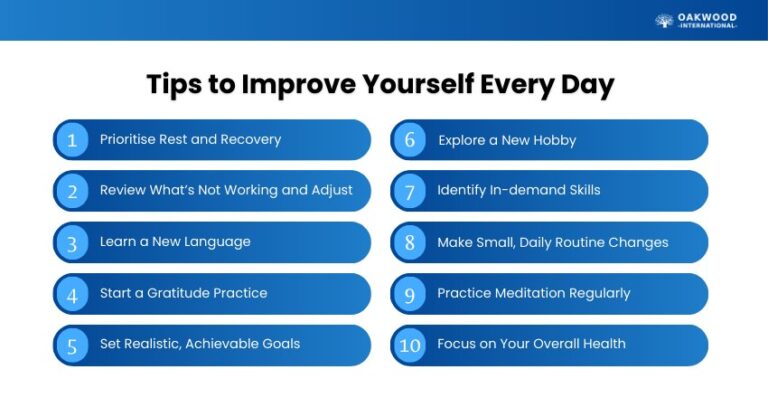
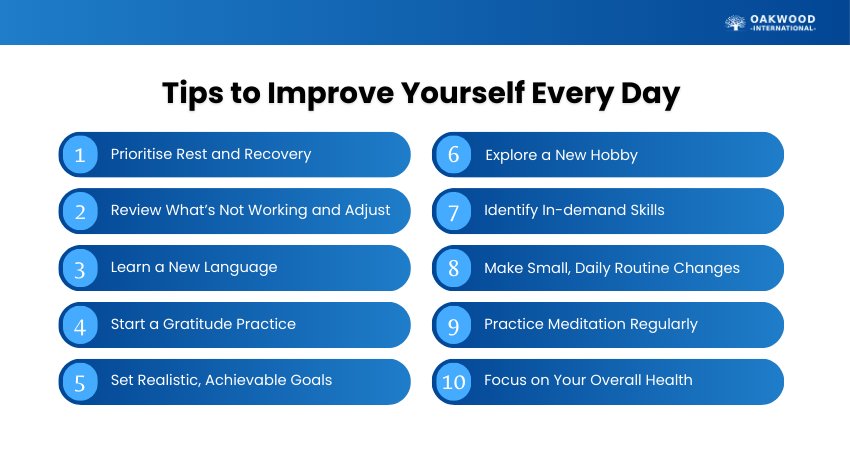
- Define your primary focus. Pick one specific area you want to change, such as reading more, exercising, or learning a language, and write it down.
- Break tasks into micro-steps. Divide your goal into actions that take less than 15 minutes to ensure you can complete them even on your busiest days.
- Establish a fixed trigger. Connect your new habit to an existing one, like practicing a skill immediately after drinking your morning coffee, to create a reliable routine.
- Monitor your daily output. Keep a simple chart or journal to record what you did, which helps you visualize your progress over time.
- Adjust based on feedback. At the end of each week, review your logs to see what worked and change your approach if you find a specific method isn’t helping you grow.
Recommended Daily Time Allocation
| Activity Type | Time Spent | Expected Result |
|---|---|---|
| Skill practice | 30 minutes | Incremental mastery |
| Reflective writing | 10 minutes | Clearer thinking |
| Physical movement | 20 minutes | Better energy levels |
| Goal planning | 5 minutes | Improved focus |
Commit to these blocks only when you can guarantee an uninterrupted environment. If you find yourself checking notifications during your thirty-minute skill window, you aren’t practicing; you’re merely performing the motions of productivity.
Most people mistake busywork for progress. If your goal is to learn a language, spend your thirty minutes on active recall rather than passive listening. If you’re exhausted by the end of the day, prioritize the movement block first to prime your brain.
Start with smaller sessions than you think you need. It’s better to finish five minutes early than to quit because a task felt too long. If you miss a day, don’t try to double the time tomorrow. Simply return to the baseline to maintain your momentum.
How Long Does It Take to See Results?
Real change typically becomes noticeable after 66 days of consistent practice, according to research from University College London. While you might feel a mental boost after just a few days, the automatic nature of a new habit requires repeated effort over several weeks.
You shouldn’t expect immediate transformation, as the process relies on building neural pathways through repetition. If you miss a day, don’t let it stop your progress; just return to your routine the next morning. Aiming for perfection often leads to burnout, so treat your growth as an ongoing experiment rather than a race to the finish line.
Mistakes That Stop Your Progress

Why does setting too many goals at once cause failure?
Trying to change five habits simultaneously splits your willpower and makes it impossible to track your success effectively. When you focus on too many things, you’ll likely abandon all of them within a week. Pick one core area first and only add another once the first habit feels automatic.
What happens when you ignore rest days?
Pushing yourself without breaks leads to mental fatigue, which makes your daily tasks feel like a burden. Your brain needs time to process new information and recover from the effort of learning. Including 1 day of light activity per week keeps your motivation high for the long term.
Frequently Asked Questions
Can I improve if I have a busy schedule?
Yes, you can improve by using “dead time” during your day, such as listening to educational audio while commuting or doing light stretches while waiting for a kettle to boil. Even 10 minutes of focused effort is better than doing nothing at all.
Is it better to focus on strengths or weaknesses?
Focusing on your strengths often yields faster results because you’re already interested in the subject, which keeps you engaged. However, addressing a specific weakness that blocks your progress is necessary if it’s currently preventing you from reaching your main goals.
Should I change my methods if I feel stuck?
Yes, if you haven’t seen any progress after 30 days, you should change your environment or the way you study. Sometimes a simple switch, like moving from reading books to watching video tutorials, provides the fresh perspective you need to move forward.
Select one small habit from your list and perform it for exactly five minutes tomorrow morning. That brief action will break the cycle of procrastination and give you the initial momentum needed to keep going for the rest of the week.