
The 7 Best Books About the American Revolution
This page contains Amazon affiliate links. As an Amazon Associate we may be paid a commission if you buy something through them, which costs you nothing.
The reader here is choosing between seven histories of the American Revolution — and what separates them is scope, not quality. Some cover a single year or a single campaign. Others follow the whole war, or step back to ask what the country was for. Match the book to the period you actually want to understand.
Best overall: The British Are Coming: The Best for one year, told close: 1776 Best for the whole war, with its arguments: The Cause: American Revolution
The rest of this guide takes each one in turn, says who it suits, and names the reader it doesn’t.
How We Picked
This guide covers seven Amazon listings in this category, kept because their titles and series information tell a reader something concrete. A listing earned its place by naming a clear period, a clear subject, or a clear position in a series — the years covered, the battles covered, the figures at the center. Books whose listings gave nothing beyond a title were kept only where the title itself does that work.
The result runs from a single year to the whole conflict, with one collection of speeches at the end. Which one is right depends on what you already know and what you want next.
| # | Product | ||
|---|---|---|---|
| 1 | 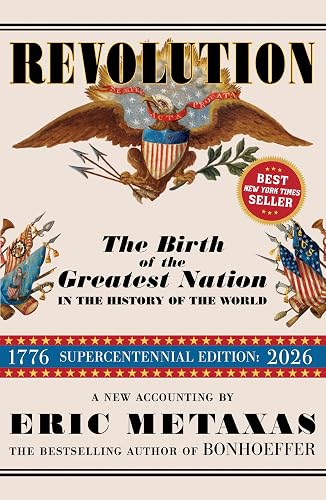 | Revolution: The Birth of the Top pick | Check Price |
| 2 |  | 1776 Recommended | Check Price |
| 3 |  | The Fate of the Day Recommended | Check Price |
| 4 |  | The British Are Coming: The Recommended | Check Price |
| 5 |  | Valiant Ambition: George Washington Recommended | Check Price |
| 6 |  | The Are What We Stand Recommended | Check Price |
| 7 |  | The Cause: American Revolution Recommended | Check Price |
1. Revolution: The Birth of the
Best for: A reader who wants the big, sweeping story.
This listing gives a title and nothing else — no page count, no publisher details, no description of the period covered. That’s the whole of what the listing states.
Because the listing is bare, the honest thing is to treat this as the least specific option on the list. If you want a book whose title takes the founding as its subject, this is the one. If you want to know which years or which battles are inside, the listing won’t tell you.
Pros
- Title signals a broad founding narrative
- Suits a reader new to the subject
Cons
- Nothing states what the book argues
2. 1776
Best for: A reader who wants one year, told close.
The title names a narrow slice of the war, and that’s the book’s whole frame. A reader picking this up is choosing a close-up over a survey. If you already know the outline of the Revolution and want to sit inside a single stretch of it, that’s the trade this title offers.
The listing states nothing beyond the title, so there’s no page count, no description of which campaigns the year covers, and no note on the author’s approach. What the title does give you is a promise of narrow focus, and that’s a real difference from the sweeping accounts on this list.
This isn’t the book for a reader who wants the whole war in one volume. The title names a narrow span, and that’s the whole of what the listing states.
Pros
- Title promises tight, single-year focus
- Good follow-up once you know the outline
Cons
- Listing states nothing beyond the title
- Not a full-war account by any reading
3. The Fate of the Day
Best for: A reader following the war in sequence.
The full title places this book second in a trilogy and names its ground precisely: Fort Ticonderoga to Charleston, 1777 to 1780. A reader who wants the campaigns of those years, in order, is the reader this book is aimed at.
The subtitle also tells you it’s volume two. That’s the fact that matters most here: a reader who hasn’t read the first book is starting mid-argument. The listing gives no page count and no description beyond the title, so the sequence is the main thing you can rely on.
This isn’t the book for someone who wants a standalone account. It’s the middle of a set, and it reads that way.
Pros
- Title names exact years and battles covered
- Clearly marked as volume two of three
- Title names the war’s middle stretch, 1777 to 1780
Cons
- Middle volume, so it follows an earlier book
4. The British Are Coming: The
Best for: A reader who wants the war from the start.
This is volume one of the same trilogy, and its title names the opening: Lexington to Princeton, 1775 to 1777. A reader who wants to begin at the beginning, in detail, has the period spelled out for them before they open the book.
Because it’s the first volume, it stands on its own in a way the second one doesn’t. The listing gives no page count and no description beyond the title, so the dates and the battles are the concrete information you get. What the title does establish is a starting point — which is exactly what a reader new to a trilogy needs.
This isn’t for a reader who wants the whole war in one book. The title names 1775 to 1777, and the listing states nothing beyond that.
Pros
- Title names opening years and battles
- First volume, so it starts the story
- Clear period: 1775 to 1777
Cons
- Covers only the war’s first two years
5. Valiant Ambition: George Washington
Best for: A reader drawn to character over campaigns.
The title puts two names side by side — George Washington and Benedict Arnold — and frames the book around the fate of the Revolution rather than its battles. A reader who wants to understand why the war turned out as it did, through the figures who made it turn, is the reader this suits.
The listing also notes that the book cover may vary, which is a printing detail rather than a fact about the contents. Beyond the title, the listing states nothing — no page count, no description of the period covered.
This isn’t the book for a reader who wants battles and dates in sequence.
Pros
- Title centers two major figures
- Focus on motive, not just events
- Part of an established series
Cons
- Cover may differ from the image shown
6. The Are What We Stand
Best for: A reader who wants short pieces, not a narrative.
The full title is The American Spirit: Who We Are and What We Stand For, and the phrasing points to reflection rather than chronology. A reader who wants something to dip into — a few pages at a time, on what the country is for — is the reader this fits.
The listing states nothing beyond the title. There’s no page count, no note on how many pieces are included, and no description of which occasions they came from. What the title does tell you is the register: it’s about meaning, not muskets.
This isn’t the book for a reader who wants the war told in order. The title points to reflection rather than a campaign narrative.
Pros
- Title signals short reflective pieces
- About the country’s meaning, not battles
Cons
- Not a narrative history of the war
7. The Cause: American Revolution
Best for: A reader who wants the war and its arguments.
The full title is The Cause: The American Revolution and its Discontents, 1773-1783, and it names the whole span of the conflict — from the early trouble to the peace. The word “discontents” in the subtitle is doing real work: it signals a book about division and disagreement, not just victory. A reader who wants to understand that not everyone agreed, and who wants the full period covered, is the reader this is aimed at.
The listing gives no page count and no description beyond the title. But the years themselves are the most useful fact here — 1773 to 1783 is the broadest span on this list, broader than either trilogy volume and broader than the single-year account.
This isn’t the book for a reader who wants a straightforward patriotic narrative; the subtitle’s word “discontents” is the only hint the listing offers.
How to Choose in Sixty Seconds
Do I want one year or the whole war?
Decide this first, because it splits the list in two. 1776 covers a narrow span in depth. The Cause: American Revolution covers 1773 to 1783 in one volume. The trilogy volumes sit in between — The British Are Coming: The opens the war, and The Fate of the Day takes the middle years. Pick your span, then pick your book.
Should I start with volume one or volume two?
Start with volume one. The British Are Coming: The is the first of its trilogy and begins at Lexington. The Fate of the Day is the second and starts in 1777, assuming you already know what came before. Reading them out of order works, but the sequence is clearly marked in the titles, so there’s no reason to fight it.
What should I check before I order?
Check what the listing actually states, because several of these give a title and little else. Confirm the period you want is named in the title, and confirm whether the book is part of a series. If you want a full-war account in one volume, that’s The Cause: American Revolution. If you want character-driven history, that’s Valiant Ambition: George Washington.