The 6 Best Science Fiction Books of All Time, Ranked
Disclosure: we are an Amazon Associate and are compensated for qualifying purchases made through some of the links in this article. Your price is exactly the same.
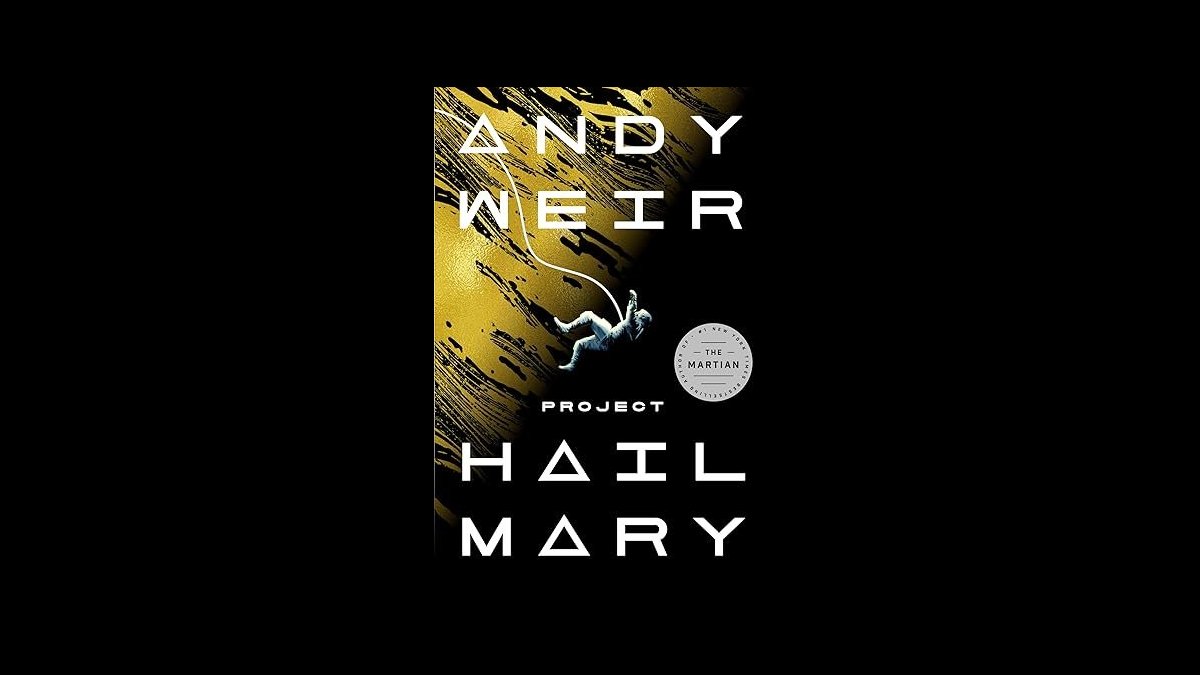
Best overall: Project Hail Mary: A Novel — a lone survivor story that keeps the science front and center while the friendship at its heart does the emotional work.
Best for a first-time reader: The Martian — the same problem-solving style in a tighter package, and the easiest place to start.
Best for the reader who wants a large world: Red Rising — a full society with a class system, a rebellion, and a long road ahead of it.
These six science fiction books give you almost nothing to work with on paper, so the guide ranks them on the kind of story each one tells and who it suits.
How We Picked
The six that stayed are all strong starting points for someone new to the genre.
1. Project Hail Mary: A Novel

Best for: The reader who wants science and heart in one book.
The listing doesn’t mention a series, so there’s no earlier book named to read first. The premise puts one man alone on a ship with no memory of how he got there, and the story unfolds as he works out what he’s supposed to be doing. That structure means the reader learns the rules at the same pace the character does.
It’s also a long book, and the middle stretch takes its time getting where it’s going. If you want a fast, single-sitting read, this isn’t that.
2. The Martian

Best for: The reader picking up their first science fiction novel.
One person, one planet, one problem after another, and each problem gets solved with the materials he actually has. The listing describes it as a survival story, so judge it on that premise alone.
What makes it work as a first pick is the narrow focus. There’s no politics, no large cast, and no world-building to keep straight.
The trade-off is scale. If you want a big society or a sprawling conflict, this stays in a single location with a lone protagonist the whole way through. Nothing opens out later. The narrowness is the whole book, not a stage it passes through.
That cuts both ways for a first-time reader. You never have to hold a map or a family tree in your head, which is exactly what trips people up when they start with something larger. But you also never get the thing that hooks many readers on the genre for life: the sense of a world bigger than the page.
So the choice comes down to what you want from a first book. If you want to finish something and feel the momentum of a story that keeps moving, take this one. If what you’re after is scale, this is the one of the six that won’t give it to you.
3. Dungeon Crawler Carl

Best for: The reader who wants something funny and strange.
This one is a series opener, and it wears that plainly. The setup drops an ordinary person into a game-like structure where survival depends on clearing levels, which gives the book a built-in momentum. It’s a very different tone from the other five here, and that’s the point.
If you like your science fiction serious and grounded, this will feel like a different genre entirely. And because it’s book one of a run, you’re signing up for more than a single story if it lands for you.
Pros
- Series opener with a clear, game-like structure
- Comic tone that stands apart from the rest of the list
- Level-by-level format keeps momentum steady
Cons
- First in a series, so the story continues past this book
- The humor won’t suit readers wanting a serious tone
4. Red Rising

Best for: The reader who wants a whole society to explore.
The scope is the largest of the six, which means more names, more factions, and more to keep track of in the early chapters. Once it clicks, the payoff is a world with real depth.
The trade-off of that scale is the opening. There’s a lot of groundwork before the story takes off, and readers who want a tight, single-thread plot may find it slow going. It’s also book one, so the story doesn’t finish here.
Pros
- Wide world with a detailed class system
- Rebellion plot with a large cast and high stakes
- Strong setup for a longer reading commitment
Cons
- Slow opening while the world gets established
- First in a series, not a self-contained story
5. Wool: The Silo Saga

Best for: The reader who likes a slow-burn mystery.
This is the first book in the Silo Saga, and the title tells you it’s part of something bigger. The premise is a closed community living underground, where the rules matter and the outside is a question nobody wants answered. That setup builds tension quietly rather than through action.
It rewards patience more than speed. If you want answers early, this holds them back, and the series framing means the full picture isn’t in this volume. Readers who enjoy atmosphere over pace will get more out of it.
The title is the one detail the listing gives you, and it does real work. “Book 1” and “the Silo Saga” both point past this volume before you open it. So the question isn’t whether the story ends here, because it doesn’t.
Ask instead whether you mind waiting. If a mystery that withholds is what you want, start here. If you need the whole arc resolved in one sitting, the series label is your warning, and you should go in knowing that.
Pros
- Closed-community premise that builds tension slowly
- Mystery-driven plot that rewards patience
- First volume of a named series
Cons
- Answers come slowly rather than early
- Series opener, so this book isn’t the whole story
6. Children Time

Best for: The reader who wants big ideas over action.
The ideas do the heavy lifting here, more than any single character.
That’s also the catch. Readers who want a fast plot or one hero to follow will find it more cerebral than they expected, and the scale can take a chapter or two to settle into. Go in expecting a thought experiment and it delivers.
The premise is the whole draw, so the test is simple. If you pick up a book to find out what happens next to someone, this will feel slow. If you pick it up to find out what a civilization becomes over a long stretch of time, that same patience pays off.
Nothing here asks you to commit past the final page. You get the full arc in a single volume, which makes it an easy place to try this kind of idea-driven science fiction before committing to a longer series.
Pros
- Big-picture ideas about intelligence and evolution
Cons
- Idea-driven rather than action-driven
- Large scale takes time to settle into
How to Choose Science Fiction Books in Sixty Seconds
Do I need to read a series in order?
Yes, for the ones that are series. Dungeon Crawler Carl, Red Rising, and Wool: The Silo Saga are all first volumes, so start at book one and continue in order. Project Hail Mary: A Novel, The Martian, and Children Time are standalone, so you can read any of them without anything else.
Which one should I start with if I’ve never read science fiction?
The Martian. It has a lone protagonist, a single setting, and a problem to solve, which keeps the number of things you’re tracking low. If you want the same feel with more emotional weight, Project Hail Mary: A Novel is the natural next step. Both are standalone, so nothing else is required.
What should I check before I order?
Confirm whether the book is standalone or the first in a series, because that decides whether you’re buying one story or starting a run. Check the format you want, since listings often carry more than one. And read the sample pages if they’re offered, because tone varies a lot across these six.
Is the simplest book on the list enough?
It depends on what you want from it. The Martian is the most straightforward, and it’s a complete story on its own. If you finish it wanting more scale, Red Rising gives you a society to explore, and Children Time gives you bigger ideas. Start simple and move outward.